
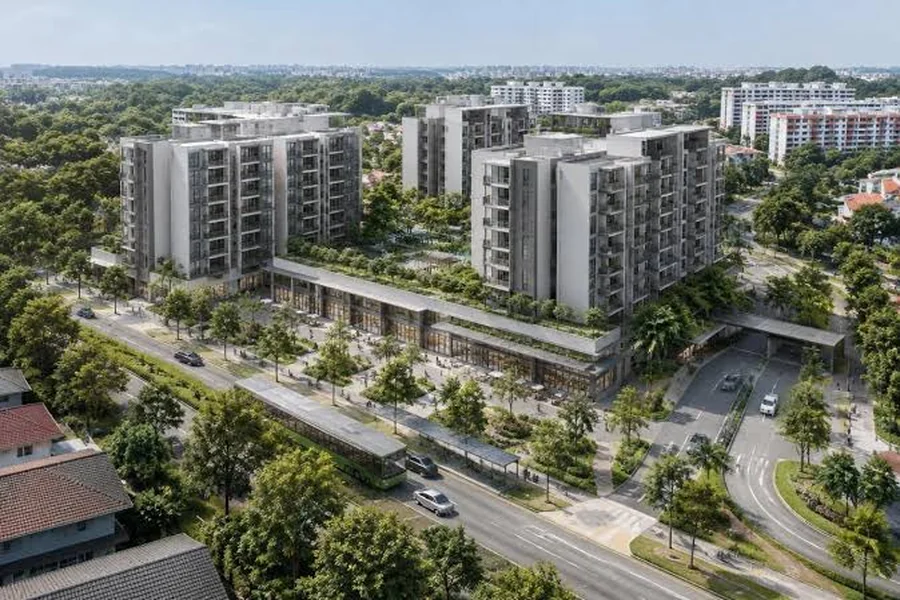
Following Gem Residences and Ola, the joint venture’s next chapter is defined by a broader ambition. Chencharu Central Residences, a new condominium at Chencharu Close by Evia Real Estate, Gamuda Land and Ho Lee Group, marks its first mixed-use venture. The shift is significant: rather than approaching a home as a destination separate from daily errands and neighbourhood activity, the development introduces a more interconnected proposition. For buyers, the interest lies in how established residential experience can translate into a setting where private living and everyday convenience work together.
From Gem Residences and Ola to a Broader Development Vision
Gem Residences and Ola provide the reference points for understanding this latest move. Their place in the headline is more than a backward glance; it frames Chencharu as an evolution of the development journey. The emphasis now extends beyond the residential component to the relationship between a home and the uses around it. That makes the new project a different kind of undertaking, requiring attention not only to individual living spaces but also to how the wider environment functions throughout the day.
For a developer partnership, moving into mixed use changes the questions that matter. A residential development must deliver comfort, privacy and a coherent sense of arrival. A mixed-use address must consider these alongside accessibility, public activity and the interface between different users. The opportunity is to create a place that feels convenient without compromising its residential character. That balance, rather than scale alone, is what gives the JV’s first mixed-use bet its significance.
Why Chencharu Central Residences Changes the JV’s Proposition
At Chencharu Close, the partnership is positioning its next residential offering within a more layered development concept. Mixed use introduces the possibility of bringing complementary activities closer to home, potentially reducing the separation between domestic routines and everyday necessities. The appeal is easy to understand in Singapore, where buyers often assess an address through both the quality of the home itself and the ease with which it supports a working week.
Yet convenience is only the starting point. The stronger proposition is a residential environment that participates in its neighbourhood while retaining a distinct identity. For Chencharu Central Residences, that is the central promise to watch as more project information becomes available. The eventual composition and arrangement of its different uses will matter more than the mixed-use label alone. How those elements connect will determine whether the concept becomes a meaningful advantage for residents.
Three Partners Enter a More Demanding Development Category
The involvement of Evia Real Estate, Gamuda Land and Ho Lee Group gives the venture a clear collective identity. Their first mixed-use undertaking together places greater emphasis on coordination: the residential vision and the wider development strategy need to reinforce one another. Buyers are therefore looking at more than a new condominium launch. They are considering how a partnership approaches a broader set of responsibilities than those associated with a solely residential scheme.
This is where the progression after Gem Residences and Ola becomes particularly relevant. Earlier residential experience provides context, but mixed use is not simply a familiar formula with another component added. It calls for decisions about boundaries, movement and the coexistence of private and shared environments. The JV’s next chapter will be judged by how convincingly those decisions support the experience of living there, rather than by the novelty of entering a new category.
Convenience Must Be Matched by Residential Calm
A successful mixed-use proposition should make daily life easier without making home feel exposed to surrounding activity. Clear access arrangements, thoughtful transitions and a legible distinction between residential and non-residential areas are therefore important considerations. These are principles for evaluating the concept, not assumptions about unannounced project features. For discerning buyers, they offer a useful way to look beyond launch imagery and assess whether the development’s broader ambition translates into practical comfort.
A Different Buyer Conversation After Gem Residences and Ola
The move into mixed use also changes how prospective purchasers may compare this launch with the projects that preceded it. The conversation becomes less about residential features in isolation and more about the rhythm of living at the address. Could everyday activities fit more naturally around work and family commitments? Would the relationship between the home and its surroundings make the location more useful? These questions give the new venture a distinct position within the partnership’s development story.
For owner-occupiers, the attraction may lie in that potential for a more connected routine. Buyers assessing longer-term appeal may also consider how effectively the mixed-use concept serves genuine daily needs. Neither perspective makes future demand or financial performance a certainty. Instead, both point towards the same evaluation: whether the eventual offering delivers enduring usefulness alongside the qualities expected of a private condominium.
The JV’s Next Chapter Will Be Defined by Execution
Chencharu Central Residences represents a deliberate step beyond the residential reference points of Gem Residences and Ola. Its significance lies in the JV’s willingness to broaden the proposition, bringing a mixed-use ambition to its new address at Chencharu Close. For buyers, the most compelling story is not simply that this is a first. It is the prospect of residential experience being applied to a more connected setting—and the opportunity to assess how thoughtfully Evia Real Estate, Gamuda Land and Ho Lee Group turn that ambition into a place to call home.