
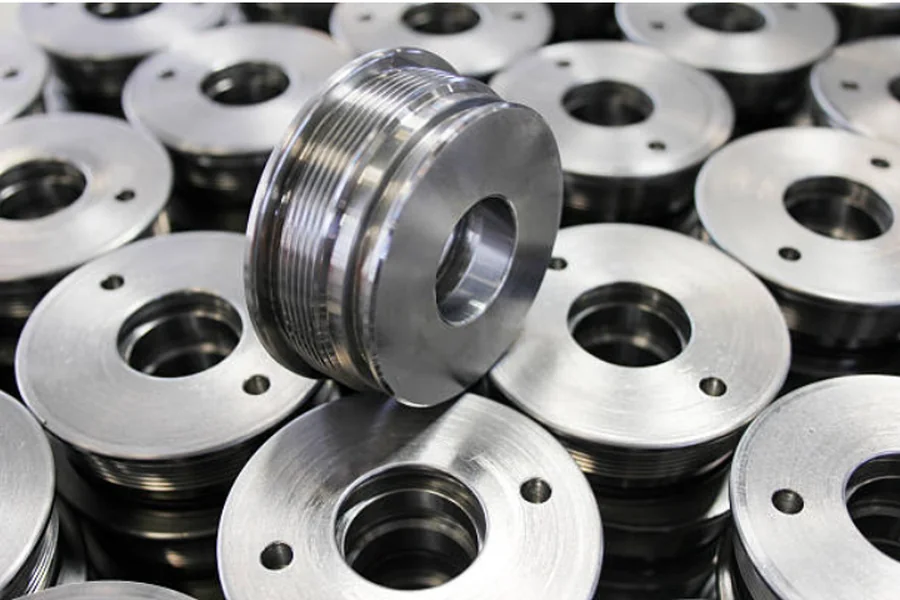
With the relentless demand for more efficient and durable vehicles, the automotive industry is continually transforming itself. One of the key transformations is undoubtedly the increased use of aluminum machined parts. Considered one of the most robust and lightweight metals, aluminum also possesses corrosion resistance, making it suitable for high-performance automotive applications. As the industry demands more innovations to improve vehicle efficiency and performance, custom precision machined parts are playing a significant role.
This article highlights the importance of aluminum machined parts in the automotive industry while outlining their advantages, scope of use, and the impact custom precision machined parts manufacturers have on automotive innovation.
The Benefits of Aluminum Machined Parts in the Automotive Sector
Aluminum is extraordinarily adaptive, especially regarding its application in automobiles; primarily, its lightweight feature propels it to the forefront of automobile manufacturing. Additionally, aluminum machined parts are of critical importance now, due to the need for fuel efficiency alongside decreasing carbon emissions. The replacement of materials such as steel in some parts allows for the reduction of vehicle weight, which augments fuel efficiency and performance. This also improves acceleration and speed, fostering improved responsiveness for vehicles on the roads.
Furthermore, the automotive sector faces some advanced engineering challenges due to exposure to unruly weather conditions such as high temperatures and rain. The use of aluminum machined parts mitigates these chassis engineering issues, as the parts bearing high corrosion and high temperature, while not needing much maintenance are highly durable. Along with this, aluminum’s capability of heat dissipation keeps the automotive systems chill and efficient in the long run, catalyzing the vehicle’s lifespan.
Custom precision machined parts enable the customization from custom design interfaces, allowing automotive engineers to contour their parts along precise standards of design and performance.
Accuracy is important in ensuring the dependability and safety of contemporary vehicles with sophisticated electronic components, modern engines, and high-performance drivetrains. It is therefore beneficial in terms of cost and performance to both manufacturers and consumers that these components are made from aluminum.
The Role of Custom Precision Machined Parts in Automotive Manufacturing
The demand for custom precision machined parts has increased due to the use of new advanced high-strength and lightweight materials in the manufacturing of automobiles. These parts, Custom precision machined components, are very important for modern automotive technology. Unlike mass-produced components, precision components are designed, engineered, and manufactured to bespoke specifications, and therefore achieve engineering objectives such as performance, efficiency, and power. Each customized component can be optimally designed improving the vehicle’s overall handling, speed, and efficiency.
Custom precision machined parts satisfy the specific requirements of every single vehicle, whether it is an automobile or a motorcycle, and includes parts from the engine, suspension down to structural parts. Precision bespoke components aid the automobile industry enhance its main objectives of improving safety standards, system operating efficiency, and eco-friendly sustainability, Custom parts can result in high vehicle durability while ensuring low system fail rate enhancing reliability.
This has created an opportunity for manufacturers to design performance custom bespoke parts using advanced engineering techniques alongside high-tech machinery in stringent competition markets where innovative solutions are required.
Developments in technology have led to the automation of tasks that previously required a human touch. CNC machining refers to one of the most refined techniques used in creating custom precision machined components. It sets the standards for accuracy and quality. Through its use, even the most complex structures can be crafted effortlessly.
How Aluminum Machined Parts Improve Vehicle Performance
Speed is not the only factor that defines vehicle performance; it also includes other aspects like efficiency, durability, and handling. The use of aluminum machined parts in the engine, transmission, and even braking systems gives automotive manufacturers optimal performance using light weight machined components. Lightweight vehicles are more fuel-efficient due to lower emissions, helping operational costs in the long run.
Aluminum machined parts in carburetors like cylinder heads and pistons reduce the weight of the engine and improve acceleration aided by lower fuel consumption. Lightweight vehicles directly use less energy to move, thus enhancing fuel efficiency, something critical to today’s eco friendly automotive market. In racing and performance vehicles, agility is also improved making the vehicle more responsive to driver input.
The ability of aluminum to conduct heat makes it a preferred metal for electrical machined parts. In high revving performance engines, components made of aluminum help cool the engine better, preventing overheating and increasing the lifespan of the engine. During performance and race cars engine reliability becomes crucial. Thus, incessant thermodynamic changes add stress for heat management ensuring all conditions are optimal for engine performance.
The Growing Importance of CNC Machining in Automotive Manufacturing
The automotive industry’s shift towards custom precision machined parts has placed CNC (Computer Numerical Control) machining at the center of this transformation. CNC machining allows manufacturers to create aluminum machined parts with high precision and repeatability. This is particularly important in the production of automotive components, where even the smallest deviation can affect performance, safety, and the longevity of the part. CNC technology makes the process efficient, accurate, and adaptable to complex automotive designs.
CNC machining offers several advantages, including increased automation, reduced labor costs, and faster production times. By automating the manufacturing process, automotive companies can produce high-quality parts more quickly and efficiently. This is especially beneficial in a competitive market where speed and precision are paramount. CNC machines can quickly transition from one design to another, allowing manufacturers to meet the demands of rapidly changing market trends and customer specifications.
Moreover, CNC machining enables the creation of complex geometries and intricate designs that would be difficult or impossible to achieve with traditional manufacturing methods. The ability to create custom precision machined parts with such fine details opens up new possibilities in automotive engineering, allowing manufacturers to innovate in ways that were not previously possible. As demand for unique, high-performance vehicle features grows, CNC machining will play a pivotal role in meeting these needs.
Conclusion
The automotive industry is undergoing a dramatic change due to the incorporation of aluminum machined parts. These components aid in creating lighter vehicles which are used in modern transportation, as well as assisting towards global efforts on sustainability. As custom precision parts continue to develop, they will always be ardently utilized in machine work throughout the automotive industry, especially in performance-oriented vehicles.
By working with custom precision machine shops, businesses can remain competitive in the market by providing advanced and innovative solutions. Aluminum’s presence in automotive parts poses a great threat to its competitors; with time, its impact towards the industry will greatly assist in the construction of innovative, eco-friendly, and high-performance vehicles.