
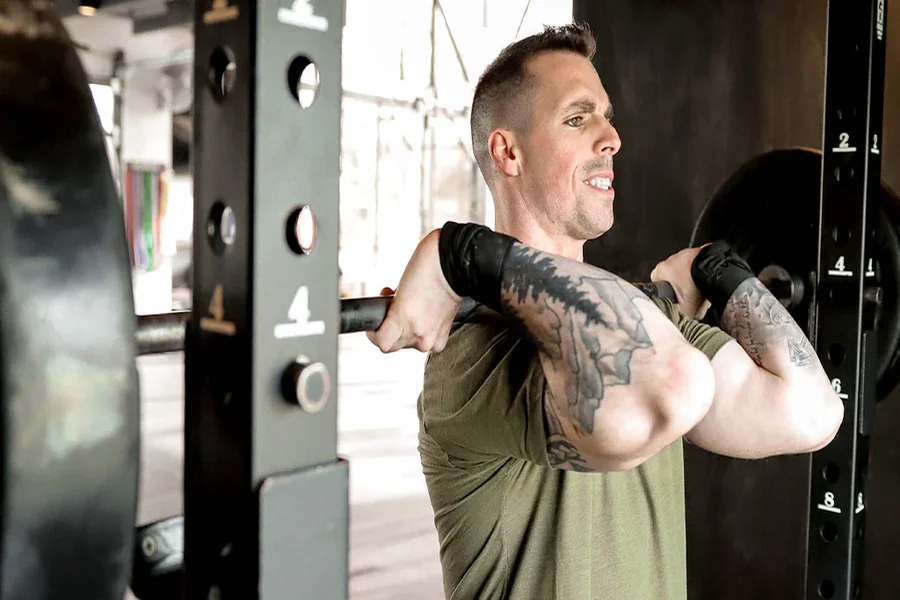
Ever feel like your muscles are ready for that heavy overhead press, but your wrists are begging for mercy? You are doing a high-intensity workout, but a sharp pain in your wrist makes you drop the bar early. It’s frustrating when your grip fails before your strength does. This common struggle shouldn’t stall your progress. To overcome this, a reliable Wrist Band comes into play that offers the structural stabilization needed to lift heavy and stay injury-free.
The Hidden Stress of Functional Fitness
In the world of CrossFit, we ask our bodies to do incredible things. We jump, we climb, and we lift heavy objects overhead. However, the wrist is often the most neglected part of the kinetic chain. Unlike your hips or shoulders, the wrist is composed of many small, delicate bones and ligaments that aren’t naturally designed to hold hundreds of pounds in an extended position.
When you are performing a front squat or a clean, your wrist is forced into a deep extension. Without the right support, this puts immense pressure on the carpal tunnel and the surrounding tendons. Over time, this “wear and tear” turns into swelling and chronic pain. That is why using a wrist wrap in your routine, you are essentially providing an extra layer of artificial ligaments to help absorb that mechanical stress.
Why Athletes Struggle to Progress Without Support
In many cases, an athlete’s legs and back are strong enough to overhead squat 200 pounds, but their wrists begin to wobble at 150. This instability sends a signal to your brain to throttle your power output to prevent injury.
When you use a high-quality wrist wrap, you provide the joint with a sense of security. This neurological feedback allows your nervous system to unlock more strength, helping you push past those frustrating limits. It isn’t cheating, it’s optimizing your body’s ability to handle load.
Wrist Wrap vs. Wrist Band: Understanding the Difference
It is easy to get confused by the variety of gear available online. However, choosing the wrong item can result in zero support during a heavy lift.
The Supportive Wrist Wrap: These are the gold standard for lifting. Made from a blend of stiff cotton and elastic, they feature a thumb loop and a heavy-duty Velcro strap. Their primary job is to immobilize the joint during max-effort attempts.
The Classic Wrist Band: Traditionally made of terry cloth, a wrist band is designed for sweat absorption. While great for keeping your palms dry during pull-ups, they offer almost no structural support for heavy barbell work.
The Versatile Wrist Band for Gym: Some athletes prefer a hybrid wrist band for gym use that offers light compression. These are excellent for high-rep metcons where you need a little bit of support but still need the flexibility to move quickly between the barbell and the pull-up bar.
Preventing Common CrossFit Injuries
Injuries in the gym usually don’t happen all at once; they are the result of micro-trauma that builds up over weeks. Common issues like De Quervain’s tenosynovitis or general carpal instability can sideline you for months.
- Stability under Load: A wrist wrap keeps the carpal bones tightly packed, preventing them from shifting under the weight of a snatch or jerk.
- Tendon Protection: By limiting the range of motion slightly, you prevent the tendons from being stretched to their breaking point.
- Pressure Distribution: Instead of the weight of the bar digging into one specific spot on your palm, a wrist band for gym or a wrap helps distribute that force across the entire forearm.
When to Wrap Up and When to Go Raw
A common mistake is wearing support for every single movement, even when warming up with the PVC pipe. To maintain true joint health, you need to find a balance. This comes with using the right tool for the right job.
Use Wraps For: 1-rep max attempts, heavy thrusters, overhead squats, and handstand walks.
Go Without For: Bodyweight movements, light technique work, and general mobility drills.
Using your wrist wrap selectively ensures that your natural grip strength and wrist stability continue to develop, while the gear protects you during the danger zone of heavy lifting.
The Anatomy of a Perfect Wrap Technique
To get the maximum benefit, you must apply the wrap correctly. Many beginners wrap too low on the forearm, leaving the joint completely exposed.
The Crease Rule: The wrap must sit directly over the crease where the hand meets the arm.
The Tension Hack: For a heavy lift, pull the wrap until it feels slightly uncomfortably tight. Once the set is over, immediately loosen the Velcro to allow blood flow.
The Thumb Loop Secret: The loop is just a starter tool. Once the wrist wrap is secure, pull the loop off your thumb so it doesn’t interfere with your grip on the bar.
Performance Gains You Can Feel
When you wear a wrist band for gym sessions that require high intensity, you’ll notice that your hands feel less fatigued toward the end of the workout. Because the wrap is doing the work of stabilizing the joint, your forearm muscles don’t have to work as hard. This means more gas in the tank for those final reps of pull-ups or kettlebell swings.
Material Matters: Cotton vs. Elastic
Not all wraps feel the same.
Cotton Cloth Wraps: These are thinner and adjusted by twisting the fabric. They are great for moderate support and offer the most flexibility.
Elastic/Velcro Wraps: These provide maximum cast-like support. If you are going for a PR (Personal Record) in the bench press or clean and jerk, this is the wrist wrap you want.
Longevity: The Ultimate Goal
CrossFit is about long-term progress, not quick results. The goal is to be the person who is still hitting the gym at age 60 or 70. Protecting your joints today is an investment in your future self. Constant niggling pains in the wrist are often the first sign that the joint is being overloaded. By using a wrist band or wrap, you act proactively rather than reactively.
Conclusion
Incorporating orthopedic support into your gym bag is a sign of a mature athlete. It shows that you value your body’s longevity as much as your leaderboard score. Whether it’s a heavy-duty wrist wrap for the heavy days or a flexible wrist brace for gym circuits, these tools are essential for anyone serious about functional fitness.
Are you ready to protect your progress? Explore a range of medical-grade orthopedic supports that are designed to give you the stability you need to lift heavier, longer, and safer. Train smarter, not just harder. Your joints will thank you later.